In recent years, Artificial Intelligence (AI) has evolved from a futuristic concept to an integral part of everyday life. Whether it’s through voice assistants like Siri, personalized content recommendations on social media, or predictive analytics in healthcare, AI is reshaping industries. However, for AI to function at its best, it requires significant computational power, which historically has been provided by large, energy-intensive processors.
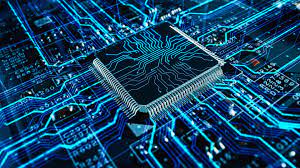
Enter micro AI chips — a breakthrough in the integration of artificial intelligence with miniature, energy-efficient hardware. These tiny yet powerful processors are designed to accelerate AI tasks and bring advanced machine learning capabilities to devices that traditionally lacked the power to run such algorithms. From smartphones and wearable devices to autonomous vehicles and smart home systems, micro AI chips are paving the way for smarter, more responsive technologies.
What Are Micro AI Chips?
Micro AI chips, as the name suggests, are compact, low-power chips designed specifically for executing artificial intelligence algorithms. Unlike traditional processors that focus primarily on general-purpose computing tasks, micro AI chips are optimized to handle machine learning tasks such as data processing, inference, pattern recognition, and decision-making.
These chips are designed to integrate AI capabilities directly into devices, reducing the need for cloud-based processing, which can be slow, costly, and energy-inefficient. Micro AI chips enable AI to function locally on devices, providing faster responses, lower latency, and enhanced privacy, as sensitive data can be processed directly without the need for transmission over the internet.
Key Features of Micro AI Chips
- Low Power Consumption: One of the defining characteristics of micro AI chips is their ability to deliver high performance while consuming minimal power. This is critical for portable devices like smartphones, wearables, and IoT gadgets, where power efficiency is a priority.
- Edge Computing: These chips are often designed to operate in edge computing environments, where the data is processed closer to the source rather than relying on a centralized cloud server. This reduces latency, increases real-time performance, and ensures that AI-driven tasks can be performed in real time.
- Parallel Processing: Micro AI chips are built to process data in parallel, allowing them to handle complex machine learning models much faster than conventional processors. This makes them ideal for tasks like image and speech recognition, autonomous driving, and even gaming.
- Small Size: Despite their impressive capabilities, micro AI chips are incredibly small, which allows them to be integrated into a wide range of devices, from smart home products to medical wearables and robots. Their miniaturized form factor is key to enabling AI to be ubiquitous in everyday life.
Applications of Micro AI Chips
- Smartphones and Wearables: Micro AI chips are enhancing the performance of devices like smartphones, smartwatches, and fitness trackers. They allow for real-time health monitoring, advanced photo enhancements, personalized virtual assistants, and even language translation on the go. By processing data locally, these chips ensure that devices can operate with minimal delays, even in areas with poor network connectivity.
- Autonomous Vehicles: AI is the backbone of self-driving car technology. Micro AI chips are used to process the vast amounts of data generated by sensors, cameras, and LiDAR systems in real time. These chips help vehicles make split-second decisions, such as adjusting speed, steering, or braking, based on environmental factors.
- Smart Home Devices: From smart speakers to security cameras and thermostats, micro AI chips are playing an essential role in the development of smarter home ecosystems. These devices can learn user preferences, adapt to behavior patterns, and automate tasks without relying on centralized cloud servers, making them more responsive and energy-efficient.
- Healthcare: In the healthcare sector, micro AI chips are helping devices like wearable health monitors and medical diagnostic equipment to process data locally. For example, chips can analyze patient data, detect anomalies, and provide real-time insights for doctors, without sending sensitive medical information to the cloud.
- Industrial Automation: Micro AI chips are also being used in industrial applications to improve automation systems, predictive maintenance, and real-time monitoring. They enable machines to make intelligent decisions, optimizing efficiency, reducing downtime, and enhancing safety in industrial environments.
The Advantages of Micro AI Chips
- Faster Response Times: By processing data locally, micro AI chips can dramatically reduce latency, ensuring that devices respond faster to user input and external stimuli. This is particularly important in real-time applications such as autonomous vehicles, robotics, and gaming.
- Increased Privacy: With micro AI chips, sensitive data does not need to leave the device for processing, which enhances data privacy and security. This is a key advantage in industries like healthcare and finance, where data confidentiality is paramount.
- Cost-Effective: Micro AI chips offer a more affordable solution to running AI algorithms compared to traditional cloud-based solutions. They reduce the need for expensive data centers and minimize the cost of data transmission.
- Energy Efficiency: By being power-optimized, micro AI chips are designed to run AI tasks on limited battery power, which is crucial for mobile and wearable devices. This energy efficiency is helping to drive the adoption of AI across a wider range of consumer and industrial products.
Challenges and Future Outlook
Despite their promising potential, there are some challenges in the development and deployment of micro AI chips. One of the key challenges is improving the computational power of these chips while maintaining their small size and low power consumption. As AI algorithms become more complex, there is a need for chips that can handle more intensive tasks without sacrificing performance or efficiency.
Furthermore, while micro AI chips excel in specific, localized tasks, their limited processing power compared to large-scale AI models can restrict their ability to handle certain deep learning and large data processing tasks. This necessitates collaboration with cloud-based systems for more complex processing, which may reduce some of the advantages of edge computing.
Looking forward, we can expect micro AI chips to become even more powerful and efficient as advancements in semiconductor manufacturing and AI algorithms continue. With the proliferation of IoT devices, the demand for on-device AI processing will only grow, further cementing the role of micro AI chips in the future of computing.
Conclusion
Micro AI chips represent a significant leap forward in the integration of artificial intelligence with consumer and industrial technologies. By bringing powerful, energy-efficient AI capabilities directly to devices, these chips are transforming the way we interact with technology. From smarter phones and wearables to autonomous vehicles and healthcare devices, the potential of micro AI chips is vast. As the technology matures, we are bound to see even more innovative applications emerge, creating a future where AI is embedded in the very fabric of our everyday lives.